

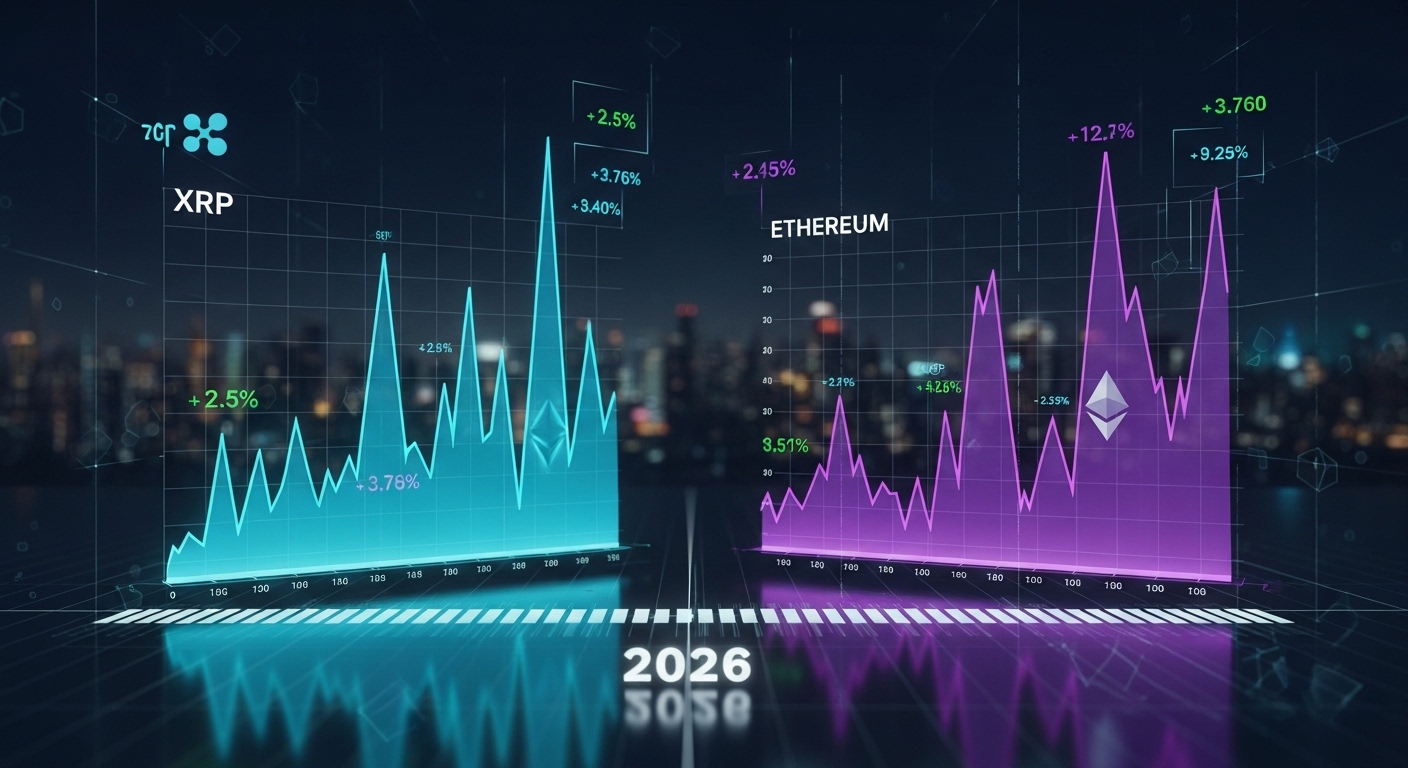
XRP vs. Ethereum in 2026 Which Crypto Has More Upside the cryptocurrency market has matured significantly over the past few years, yet the debate between XRP vs. Ethereum remains as intense as ever. As investors look ahead to 2026, the central question is clear: which digital asset offers more upside potential in the evolving crypto landscape? Both XRP and Ethereum have carved out unique positions within the blockchain ecosystem. One focuses on cross-border payments and institutional adoption, while the other powers a vast decentralized application economy.
In 2026, the crypto market is expected to be shaped by regulatory clarity, increasing institutional participation, expanding decentralized finance, and the rise of tokenized real-world assets. Against this backdrop, comparing XRP vs. Ethereum requires a deep look into their technology, market positioning, adoption trends, scalability, tokenomics, and long-term growth prospects. Understanding these dynamics is essential for anyone evaluating cryptocurrency investment opportunities.
XRP vs. Ethereum in 2026
To properly assess XRP vs. Ethereum, it is important to understand what each network is designed to achieve and how they differ fundamentally.
XRP and the Ripple Ecosystem
XRP is the native digital asset of the XRP Ledger, developed to facilitate fast and low-cost cross-border transactions. The broader ecosystem is closely associated with Ripple, a company focused on providing enterprise blockchain solutions for banks and financial institutions. XRP’s primary use case revolves around cross-border payments, liquidity solutions, and real-time gross settlement systems.
In 2026, XRP continues to market itself as a bridge currency designed to eliminate friction in global remittances. Its transaction speed and low fees remain competitive advantages, especially in regions where traditional banking infrastructure is inefficient.
Ethereum and the Smart Contract Revolution
Ethereum, launched by Vitalik Buterin, is the leading smart contract platform in the world. Unlike XRP, Ethereum was not built solely for payments. Instead, it serves as a decentralized computing platform powering decentralized finance (DeFi), NFT marketplaces, Web3 applications, and tokenized assets.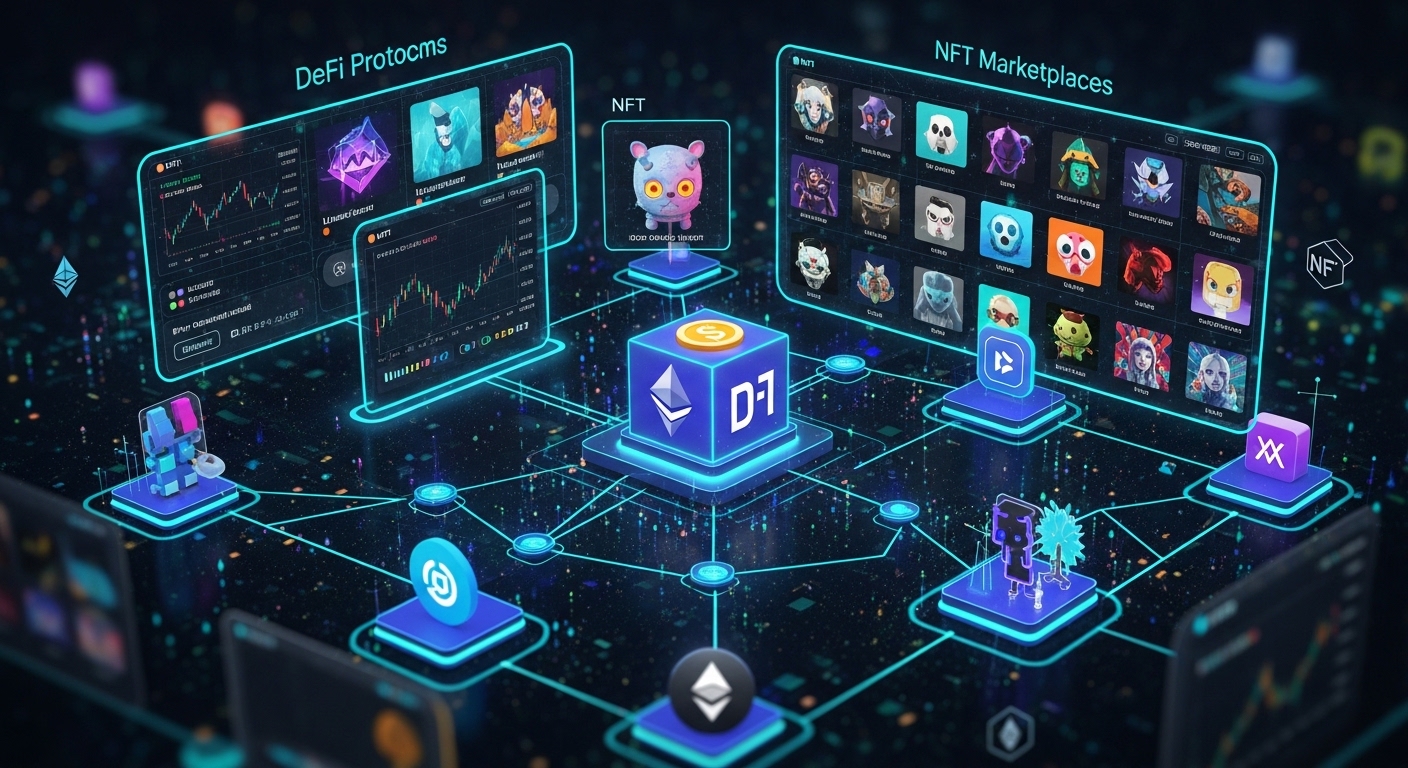
By 2026, Ethereum has further strengthened its dominance in decentralized application development. Its ecosystem supports thousands of projects and remains central to innovation in the broader blockchain industry. This makes XRP vs. Ethereum not just a payment-versus-platform debate, but a comparison between two fundamentally different blockchain visions.
Technology and Network Architecture
XRP Ledger Efficiency and Scalability
One of XRP’s strongest arguments in the XRP vs. Ethereum comparison is efficiency. The XRP Ledger uses a consensus protocol rather than traditional proof-of-work mining. This allows transactions to settle in seconds with minimal energy consumption.
As sustainability becomes a key consideration in 2026, XRP’s energy efficiency gives it a competitive edge. The network can handle thousands of transactions per second, making it appealing for enterprise blockchain adoption and financial institutions seeking scalable solutions. However, critics often point to concerns around centralization. Since Ripple holds a significant portion of XRP tokens, some argue that control over the ecosystem is more concentrated compared to other decentralized networks.
Ethereum’s Evolution and Layer 2 Expansion
Ethereum has undergone major upgrades in recent years, transitioning to proof-of-stake and improving scalability. By 2026, Ethereum relies heavily on Layer 2 scaling solutions to increase transaction throughput and reduce fees. Rollups and sidechains play a major role in supporting the growing demand from DeFi and gaming applications.
In the XRP vs. Ethereum technology debate, Ethereum’s flexibility stands out. Developers can create complex smart contracts, decentralized autonomous organizations, and tokenized ecosystems. While transaction fees can still fluctuate, the ecosystem’s depth and innovation often outweigh cost concerns for long-term investors.
Use Cases and Real-World Adoption
XRP’s Institutional Focus
In evaluating XRP vs. Ethereum for upside potential, adoption is critical. XRP’s strategy centers around partnerships with banks and payment providers. The idea is simple: improve cross-border payments by replacing slow correspondent banking systems with blockchain-based liquidity.
As global remittances continue to grow, XRP’s role as a bridge asset could expand significantly. If financial institutions increasingly adopt blockchain settlement systems, XRP’s utility could drive demand and price appreciation. However, adoption depends heavily on regulatory clarity. The outcome of legal and compliance developments plays a major role in XRP’s 2026 outlook.
Ethereum’s Expanding Ecosystem
Ethereum’s use cases are far broader. It powers decentralized exchanges, lending protocols, NFT platforms, gaming ecosystems, and tokenized real estate projects. In 2026, Ethereum is central to the tokenization of real-world assets, a trend expected to attract institutional capital.
When comparing XRP vs. Ethereum adoption, Ethereum’s advantage lies in network effects. The more developers build on Ethereum, the more valuable the ecosystem becomes. This self-reinforcing growth model has historically supported strong price performance. While XRP targets financial institutions, Ethereum captures both institutional and retail innovation. This diversification may contribute to greater long-term upside potential.
Tokenomics and Supply Dynamics
XRP Supply Structure
XRP has a fixed total supply of 100 billion tokens. A large portion was pre-mined and allocated at launch. Ripple gradually releases tokens from escrow, which can influence market sentiment.
In the XRP vs. Ethereum in 2026, XRP’s fixed supply offers predictability. Investors can model potential scarcity effects if adoption increases significantly. However, the perception of centralized token distribution sometimes affects investor confidence.
Ethereum’s Deflationary Mechanics
Ethereum does not have a fixed maximum supply. However, its fee-burning mechanism introduced in recent upgrades has made ETH potentially deflationary under high network usage. This means that during periods of strong activity, more ETH may be burned than issued.
From a long-term perspective, Ethereum’s evolving monetary policy adds an interesting dynamic to XRP vs. Ethereum discussions. A deflationary asset combined with expanding utility could support higher valuations in 2026.
Regulatory Environment and Legal Clarity
Regulation plays a central role in determining cryptocurrency upside. XRP has historically faced regulatory challenges that significantly influenced its price volatility. By 2026, improved clarity around digital asset classification could remove uncertainty and unlock institutional participation.
Ethereum, while not immune to regulatory scrutiny, has generally been viewed as more decentralized. This distinction matters when evaluating XRP vs. Ethereum for long-term growth. Regulatory clarity can serve as a powerful catalyst for price appreciation, especially for assets previously facing uncertainty.
Market Position and Investor Sentiment
Investor psychology often drives crypto markets. XRP appeals to those who believe in institutional blockchain adoption and cross-border payment disruption. Ethereum attracts investors who see value in the broader smart contract ecosystem, DeFi expansion, and Web3 infrastructure.
In 2026, market cycles and macroeconomic conditions also shape performance. During periods of innovation and strong DeFi growth, Ethereum may outperform. During times of institutional payment adoption or regulatory breakthroughs, XRP could experience explosive gains. Comparing XRP vs. Ethereum upside requires understanding these cyclical forces and recognizing that each asset responds differently to market catalysts.
Price Potential Scenarios for 2026
Bullish Scenario for XRP
If global banks increasingly adopt blockchain settlement systems and XRP becomes a standard liquidity bridge, demand could rise significantly. Reduced regulatory uncertainty combined with strong institutional partnerships may trigger substantial price momentum. In a bullish scenario, XRP’s upside depends largely on transaction volume growth and widespread enterprise adoption.
Bullish Scenario for Ethereum
Ethereum’s upside potential in 2026 is closely tied to ecosystem expansion. Growth in DeFi total value locked, NFT resurgence, gaming integration, and real-world asset tokenization could drive demand for ETH.
If Ethereum maintains its leadership position in smart contracts while improving scalability and user experience, it could attract both retail and institutional capital at unprecedented levels.
Risk Factors to Consider
No XRP vs. Ethereum analysis is complete without discussing risks. XRP faces regulatory risk and competition from alternative payment-focused blockchains. Its adoption model relies heavily on enterprise partnerships, which can be slower to materialize.
Ethereum faces scalability challenges, competition from other smart contract platforms, and potential regulatory oversight of DeFi. However, its strong developer community provides resilience. Volatility remains a defining feature of cryptocurrency markets. Investors must balance upside potential with risk tolerance when choosing between XRP vs. Ethereum.
Long-Term Investment Thesis
The long-term investment thesis for XRP centers on global payments modernization. If XRP becomes embedded within cross-border settlement systems, its value proposition strengthens considerably. The long-term case for Ethereum revolves around being the foundational infrastructure of decentralized finance and Web3. Its diverse use cases create multiple demand drivers, which may support sustained growth.
When weighing XRP vs. Ethereum for 2026, investors should consider whether they believe the future of blockchain is dominated by financial institutions optimizing payments or decentralized ecosystems reshaping the internet.
Which Cryptocurrency Has More Upside in 2026
Determining which asset has more upside is not a simple binary choice. XRP may offer higher percentage gains if institutional adoption accelerates rapidly. Ethereum may provide steadier growth driven by ecosystem expansion and deflationary tokenomics. In terms of risk-adjusted returns, Ethereum’s diversified use cases may provide stronger structural support. However, XRP’s potential regulatory breakthroughs could act as a powerful catalyst.
Ultimately, the XRP vs. Ethereum debate highlights two different visions for the future of blockchain technology. Investors seeking exposure to payment infrastructure innovation may lean toward XRP. Those betting on decentralized applications and Web3 expansion may prefer Ethereum.
Conclusion
The XRP vs. Ethereum comparison in 2026 reflects the broader evolution of the cryptocurrency market. XRP focuses on transforming global payments through institutional partnerships and efficient settlement. Ethereum continues to dominate the smart contract landscape, powering decentralized finance, NFTs, gaming, and tokenization.
Both assets offer compelling upside potential, but their growth drivers differ significantly. XRP’s upside hinges on regulatory clarity and enterprise adoption, while Ethereum’s future depends on ecosystem expansion and network innovation. For investors, diversification and careful risk assessment remain key strategies in navigating the evolving crypto landscape.
FAQs
Q: Which is better for long-term investment in 2026, XRP or Ethereum
Both XRP and Ethereum have strong long-term narratives, but they cater to different investment theses. XRP appeals to investors who believe in blockchain-based cross-border payment solutions and institutional liquidity corridors. Ethereum is often viewed as a foundational technology for decentralized finance, Web3, and tokenized assets. Long-term performance depends on adoption trends, regulatory clarity, and broader crypto market conditions, so the better choice varies based on individual investment goals and risk tolerance.
Q: Can XRP outperform Ethereum in 2026
Yes, XRP can outperform Ethereum under certain conditions. If regulatory clarity significantly boosts institutional adoption and major banks integrate XRP for cross-border settlements, it could experience rapid price appreciation. However, Ethereum may maintain stronger overall growth if DeFi, NFTs, and tokenization continue expanding at scale. Market cycles, technological developments, and macroeconomic factors will ultimately determine relative performance.
Q: Is Ethereum safer than XRP for investors
Ethereum is often perceived as less exposed to regulatory uncertainty due to its decentralized structure and broad developer ecosystem. XRP’s history of regulatory scrutiny has contributed to higher volatility. That said, both assets carry risks inherent to cryptocurrency markets, including price swings and technological competition. Investors should conduct thorough research and consider diversification strategies before allocating capital.
Q: What role does regulation play in XRP vs. Ethereum price potential
Regulation plays a crucial role in shaping investor confidence and institutional participation. XRP’s price potential is particularly sensitive to regulatory developments due to its association with enterprise payment solutions. Ethereum also faces regulatory considerations, especially concerning DeFi platforms, but its decentralized nature may provide some resilience. Clear regulatory frameworks in 2026 could unlock significant upside for both assets.
Q: Should investors diversify between XRP and Ethereum
Diversification can reduce risk in volatile markets. Holding both XRP and Ethereum allows investors to gain exposure to different blockchain sectors, including institutional payment networks and decentralized application ecosystems. Since the growth drivers for XRP vs. Ethereum differ, combining them in a portfolio may balance potential rewards and risks more effectively than concentrating on a single asset.