

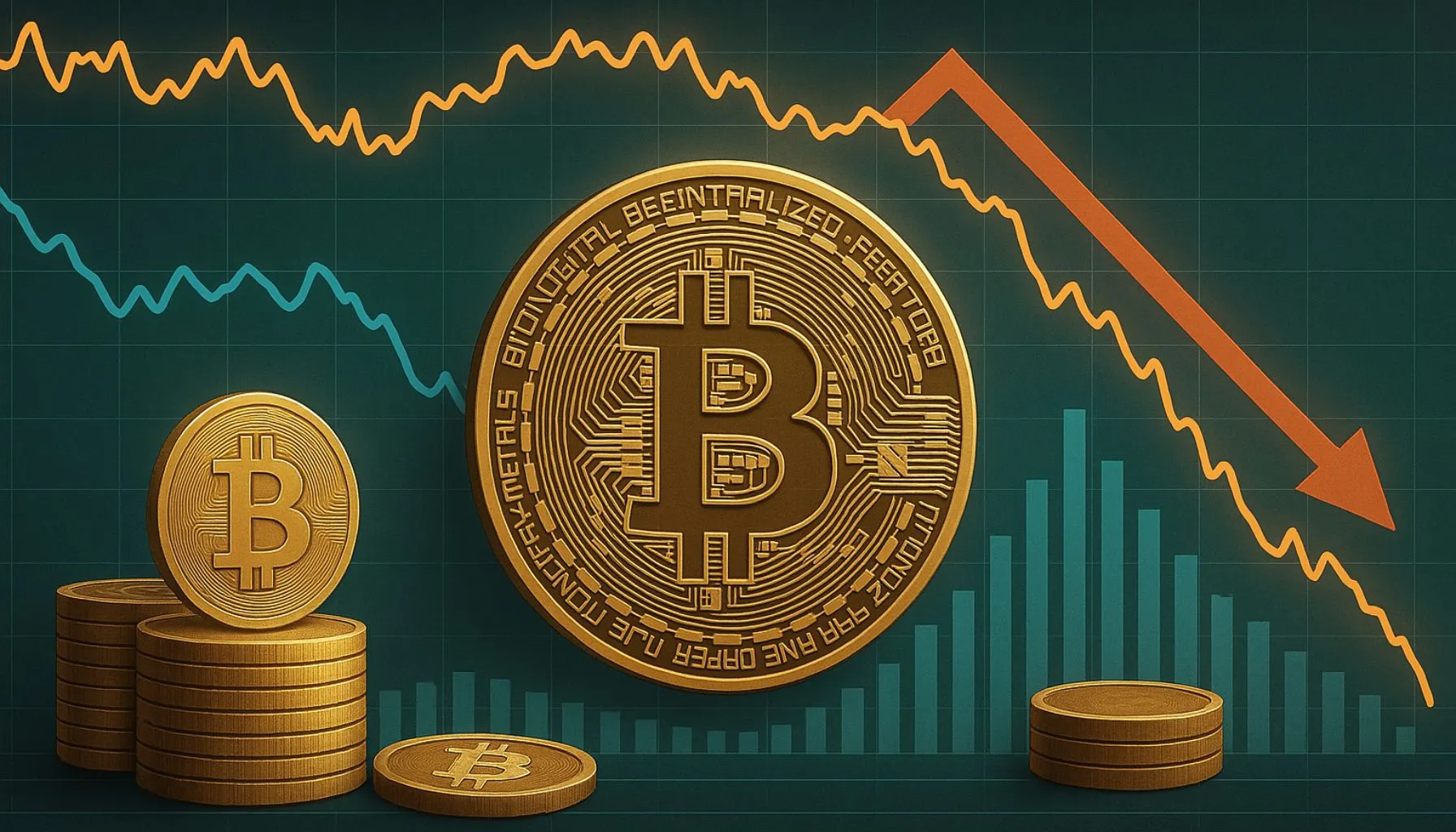
Bitcoin bear market risk continues to evolve amid shifting global economic conditions. As traditional financial markets navigate complex business cycle transitions, Bitcoin investors are increasingly concerned about potential downward pressure on digital asset valuations. The intersection of macroeconomic uncertainty and cryptocurrency volatility has created a perfect storm that could trigger prolonged bearish sentiment. Understanding how business cycle dynamics influence Bitcoin bear market risk has never been more crucial for investors seeking to protect their portfolios and capitalize on emerging opportunities in the crypto space.
Current Bitcoin Bear Market Landscape
The cryptocurrency market has historically demonstrated sensitivity to broader economic conditions, and the current environment presents unique challenges. Bitcoin bear market risk has intensified as central banks worldwide adjust monetary policies in response to inflationary pressures and economic slowdown concerns.
Historical Context of Bitcoin Market Cycles
Bitcoin has experienced several significant bear markets since its inception in 2009. Distinct economic conditions and market dynamics have characterized each downturn:
The 2011 bear market saw Bitcoin plummet from $32 to approximately $2, representing a decline of over 90%. This early-stage volatility reflected the nascent nature of cryptocurrency adoption and limited institutional participation.
2013-2015, Bitcoin experienced another substantial correction following the Mt. Gox exchange collapse. The Bitcoin bear market risk during this era was compounded by regulatory uncertainty and security concerns that shook investor confidence.
The 2017-2018 bear market remains one of the most memorable in cryptocurrency history. After reaching nearly $20,000, Bitcoin crashed to around $3,200 by December 2018, wiping out approximately 84% of its value. This correction coincided with tightening global monetary conditions and increased regulatory scrutiny.
Most recently, the 2021-2023 bear market saw Bitcoin decline from its all-time high of approximately $69,000 to below $16,000. This downturn occurred as the Federal Reserve aggressively raised interest rates to combat inflation, demonstrating the correlation between traditional financial conditions and cryptocurrency valuations.
Current Market Indicators Signaling Potential Risks
Several technical and fundamental indicators suggest heightened Bitcoin bear market risk in the current environment. On-chain metrics reveal concerning trends in investor behavior and network activity.
Exchange inflows have increased, indicating that holders may be preparing to sell their Bitcoin positions. When large amounts of Bitcoin move from private wallets to exchanges, it typically signals selling pressure and potential price decline.
The Bitcoin fear and greed index has oscillated between extreme fear and neutral territory, reflecting uncertainty among market participants. Prolonged periods in the fear zone often precede extended bearish conditions.
Mining difficulty adjustments and hash rate fluctuations provide additional insights into network health. Some miners capitulate when mining becomes less profitable due to falling prices, potentially triggering selling pressure as they liquidate holdings to cover operational costs.
Business Cycle Dynamics and Cryptocurrency Markets

The relationship between traditional business cycles and cryptocurrency markets has become increasingly apparent as Bitcoin matures as an asset class. Understanding these connections is essential for assessing Bitcoin bear market risk.
The Four Phases of Business Cycles
Economic business cycles typically progress through four phases: expansion, peak, contraction, and trough. Each phase presents unique implications for Bitcoin and cryptocurrency investments.
Expansion Phase: During economic expansion, risk appetite increases, unemployment falls, and consumer spending rises. Historically, Bitcoin has performed well during expansion phases as investors seek higher returns and alternative assets. However, as expansions mature and central banks tighten monetary policy to control inflation, Bitcoin bear market risk increases.
Peak Phase: The peak represents the transition point where economic growth plateaus before declining. Asset valuations, including cryptocurrency prices, often reach extremes during this phase. Identifying peaks is challenging in real time, but retrospective analysis shows that Bitcoin often experiences significant corrections following these periods.
Contraction Phase: Economic contractions or recessions typically trigger risk-off sentiment across financial markets. Investors flee to safety, liquidating speculative positions including cryptocurrencies. The Bitcoin bear market risk reaches maximum during contraction phases as liquidity tightens and risk assets face sustained selling pressure.
Trough Phase: The trough represents the bottom of the business cycle, where economic activity stabilizes before recovering. Historically, some of the best long-term Bitcoin buying opportunities have emerged during trough phases, though identifying them requires patience and careful analysis.
How Monetary Policy Influences Bitcoin Valuation
Central bank policies represent one of the most significant drivers of Bitcoin bear market risk in the current environment. The relationship between monetary policy and cryptocurrency valuations has strengthened as institutional adoption has increased.
Interest Rate Policy: When central banks raise interest rates to combat inflation, borrowing costs increase, and risk-free returns on government bonds become more attractive. This dynamic reduces the appeal of non-yielding assets like Bitcoin, potentially triggering bear market conditions. Conversely, low-interest-rate environments have historically supported Bitcoin bull markets by reducing opportunity costs and encouraging speculation.
Quantitative Easing and Tightening: Large-scale asset purchases by central banks (quantitative easing) inject liquidity into financial systems, often supporting risk asset prices, including Bitcoin. However, quantitative tightening—where central banks reduce their balance sheets—withdraws liquidity and increases Bitcoin bear market risk. The Federal Reserve’s balance sheet reduction program, which began in 2022, coincided with significant cryptocurrency market weakness.
Forward Guidance: Central bank communication about future policy intentions influences market expectations and investment decisions. Hawkish guidance suggesting prolonged restrictive monetary policy can suppress cryptocurrency valuations, while dovish signals may provide support.
Macroeconomic Factors Amplifying Bitcoin Bear Market Risk
Beyond traditional business cycles, several macroeconomic factors converge to amplify Bitcoin bear market risk in the coming months and years.
Global Economic Slowdown Concerns
Economic growth projections have been revised downward across major economies, raising recession concerns directly impacting cryptocurrency markets. The International Monetary Fund and other forecasting organizations have warned of synchronized global slowdown risks.
Manufacturing Sector Weakness: Global manufacturing activity has contracted or stagnated in many regions, reflecting weakened demand and supply chain challenges. Manufacturing purchasing managers’ indexes (PMIs) below 50 indicate contraction and often precede broader economic weakness, increasing Bitcoin bear market risk.
Consumer Spending Trends: Consumer confidence indicators have declined as households face elevated inflation and reduced purchasing power. Discretionary spending on speculative investments like cryptocurrency often decreases when consumers prioritize essential expenses and debt reduction.
Labor Market Dynamics: While labor markets remained relatively resilient through 2024, leading indicators suggest potential softening. Rising unemployment typically precedes risk-off investment behavior that negatively impacts Bitcoin prices.
Inflation and Purchasing Power Considerations
The inflation narrative has played a complex role in Bitcoin’s value proposition and bear market risk assessment. Initially touted as “digital gold” and an inflation hedge, Bitcoin’s actual performance during the recent inflationary period has challenged this thesis.
Correlation with Traditional Assets: Bitcoin has demonstrated positive correlation with equity markets, particularly technology stocks, during recent inflationary periods. This correlation contradicts the inflation hedge narrative and suggests that Bitcoin may experience bear market conditions alongside traditional risk assets during stagflationary environments.
Real Returns Analysis: Investors increasingly focus on real (inflation-adjusted) returns rather than nominal gains. When inflation remains elevated, the hurdle rate for Bitcoin investments increases, potentially suppressing demand and elevating Bitcoin bear market risk.
Currency Debasement Concerns: While excessive monetary expansion historically supported Bitcoin’s value proposition, the current environment of monetary tightening reduces this narrative’s immediate relevance. However, long-term concerns about currency debasement may eventually support Bitcoin prices.
Geopolitical Tensions and Market Uncertainty
Geopolitical developments create unpredictable risks that can suddenly amplify Bitcoin bear market risk through various transmission channels.
Regulatory Fragmentation: Different jurisdictions are adopting divergent approaches to cryptocurrency regulation. Restrictive policies in major markets can suppress demand and increase bear market risks, while progressive frameworks may provide support. The ongoing regulatory uncertainty creates volatility and risk premium demands.
International Conflict: Military conflicts and trade tensions increase risk aversion and can trigger capital flight from speculative assets. Cryptocurrency markets often experience sharp declines during geopolitical crises as investors seek safety in traditional safe-haven assets.
Banking System Stress: The March 2023 banking crisis, which included failures of cryptocurrency-friendly institutions, demonstrated how traditional financial system instability can paradoxically support and undermine Bitcoin. While some investors viewed Bitcoin as an alternative to vulnerable banks, the broader risk-off sentiment and liquidity concerns increased Bitcoin bear market risk.
Technical Analysis and On-Chain Metrics

Understanding technical patterns and blockchain data provides additional insights into Bitcoin bear market risk assessment and potential price trajectories.
Key Support and Resistance Levels
Technical analysis identifies critical price levels where buying or selling pressure historically concentrates. These levels help investors anticipate potential Bitcoin bear market depths and recovery points.
Realized Price: The realized price represents the average price at which all Bitcoin was last moved on-chain. This metric often serves as a psychological support level during bear markets, representing all holders’ aggregate cost basis. Breaking below the realized price typically indicates severe Bitcoin bear market risk and capitulation conditions.
200-Week Moving Average: The 200-week moving average has historically provided strong support during Bitcoin bear markets. This long-term trend indicator helps distinguish between temporary corrections and sustained bearish trends. Sustained trading below this level suggests elevated bear market risk.
Previous Cycle Highs: Bitcoin has historically found support near previous cycle peak prices during subsequent bear markets. These levels represent important psychological anchors where early-cycle buyers from previous periods may defend their cost basis.
Network Health Indicators
Blockchain-specific metrics provide unique insights into Bitcoin’s fundamental strength and potential Bitcoin bear market risk factors.
Active Addresses: The number of unique active addresses conducting transactions reflects network usage and adoption trends. Declining active addresses during price weakness may indicate diminishing interest and elevated bear market risk, while stable or growing activity suggests underlying fundamental support.
Transaction Volume: On-chain transaction volume provides insights into economic activity occurring on the Bitcoin network. Significant volume declines during price weakness may indicate reduced utility and increased Bitcoin bear market risk, while maintained volume suggests continued fundamental usage.
Long-Term Holder Behavior: Analyzing the behavior of long-term holders (addresses holding Bitcoin for over 155 days) reveals conviction levels. When long-term holders begin distributing, it often signals market tops and increasing bear market risk. Conversely, long-term holder accumulation during price weakness suggests approaching bear market bottoms.
MVRV Ratio: The Market Value to Realized Value (MVRV) ratio compares Bitcoin’s market capitalization to its realized capitalization. Extremely low MVRV readings historically indicate oversold conditions and bear market exhaustion, while elevated readings suggest overvaluation and increased correction risk.
Institutional Adoption and Its Impact on Bear Markets
The growing institutional presence in cryptocurrency markets has fundamentally altered market dynamics and potentially changed the nature of Bitcoin bear market risk.
Corporate Treasury Allocations
Major corporations adding Bitcoin to their balance sheets represent a significant development in cryptocurrency legitimization. However, corporate adoption also introduces new risk dynamics.
Accounting Treatment: Companies holding Bitcoin must account for it as an intangible asset under current accounting standards, requiring impairment charges during price declines. These accounting losses can pressure corporate sentiment and potentially trigger selling during bear markets, amplifying Bitcoin bear market risk.
Shareholder Pressure: Public companies face shareholder scrutiny regarding cryptocurrency holdings, particularly during bear markets. Pressure to reduce volatile asset exposure could force companies to liquidate Bitcoin positions at inopportune times, extending bearish conditions.
Strategic vs. Speculative Holdings: Distinguishing between companies holding Bitcoin for strategic long-term reasons versus speculative gains helps assess potential selling pressure. Strategic holders typically exhibit stronger conviction during bear markets, providing price support.
Investment Fund and ETF Flows
The approval and launch of spot Bitcoin ETFs in early 2024 represented a watershed moment for cryptocurrency markets. However, these vehicles also introduce new dynamics affecting Bitcoin bear market risk.
Flow Sensitivity: ETF flows provide transparent, real-time indicators of institutional investor sentiment. Sustained outflows from Bitcoin ETFs signal deteriorating demand and elevated bear market risk, while inflows indicate improving sentiment and potential price support.
Structural Liquidity: ETF creation and redemption mechanisms can amplify volatility during extreme market conditions. Large redemptions force authorized participants to sell Bitcoin, potentially exacerbating Bitcoin bear market risk during periods of investor panic.
Competitive Landscape: Multiple Bitcoin ETF offerings create competition for investment flows. This competition benefits investors through reduced fees and increased liquidity across multiple products, potentially affecting price discovery efficiency.
Risk Mitigation Strategies for Bitcoin Investors
Understanding Bitcoin bear market risk enables investors to implement appropriate risk management strategies, protecting capital while positioning for eventual recovery.
Portfolio Allocation Approaches
Prudent portfolio construction requires thoughtful Bitcoin allocation sizing relative to overall risk tolerance and investment objectives.
Position Sizing: Given Bitcoin’s volatility and bear market risk, financial advisors traditionally recommend limiting cryptocurrency exposure to 1-5% of the investment portfolio. More aggressive investors comfortable with higher risk may allocate larger percentages, but position sizing should reflect individual risk tolerance.
Dollar-Cost Averaging: Systematic periodic purchases reduce timing risk and smooth entry prices across market cycles. Dollar-cost averaging proves particularly effective during bear markets, allowing investors to accumulate Bitcoin at progressively lower prices if the downturn continues.
Rebalancing Discipline: Maintaining target allocation percentages through periodic rebalancing enforces buy-low, sell-high discipline. During bear markets, rebalancing involves purchasing additional Bitcoin to restore target allocations, potentially capitalizing on depressed prices.
Stop-Loss and Hedging Techniques
Active traders and risk-conscious investors can employ various tools to limit downside exposure during an elevated Bitcoin bear market risk.
Technical Stop-Losses: Setting predetermined exit points based on technical levels helps prevent emotional decision-making during volatility. However, stopping losses in cryptocurrency markets carries execution risk, given the 24/7 trading and potential for sudden price gaps.
Options Strategies: Bitcoin options markets have matured significantly, enabling sophisticated hedging strategies. Purchasing put options provides downside protection while maintaining upside participation, though option premiums represent costs that reduce returns. Put spreads and collar strategies offer cost-effective alternatives for managing Bitcoin bear market risk.
Portfolio Diversification: Diversifying across multiple cryptocurrencies and traditional assets reduces concentration risk. However, the correlation between cryptocurrencies tends to increase during bear markets, limiting diversification benefits within crypto-only portfolios.
Future Outlook and Market Recovery Indicators
While Bitcoin bear market risk remains elevated in the current business cycle environment, understanding potential recovery catalysts helps investors prepare for eventual market transitions.
Catalysts for Market Recovery
Several developments could trigger Bitcoin bear market exhaustion and subsequent recovery phases.
Monetary Policy Pivot: Central bank shifts toward accommodative policy—whether through interest rate cuts or renewed asset purchases—historically supports risk asset recoveries, including Bitcoin. Forward guidance suggests that policy easing could reduce Bitcoin bear market risk before actual implementation.
Regulatory Clarity: Comprehensive cryptocurrency regulatory frameworks provide certainty that could unlock institutional capital, which has been sidelined due to compliance concerns. Clear rules reduce regulatory risk premiums and support higher valuations.
Technological Developments: Bitcoin network improvements, scaling solutions, and enhanced utility could strengthen fundamental value propositions. Lightning Network adoption, improved privacy features, and integration with emerging technologies may attract new users and investors.
Halving Events: Bitcoin’s approximately four-year halving cycle, which reduces new supply issuance by 50%, has historically preceded bull market phases. As the event approaches, the next halving, scheduled for 2028, may reduce selling pressure and Bitcoin bear market risk.
Timing Market Bottoms
While perfectly timing market bottoms proves impossible, specific indicators suggest when bear market exhaustion may be approaching.
Capitulation Events: Extreme volatility events in which prices decline 20-30% in a single day often mark capitulation phases, when weak hands exit markets. These washouts can clear overhead supply and reduce Bitcoin bear market risk.
Sentiment Extremes: When sentiment indicators reach historic pessimism levels and mainstream media declares Bitcoin “dead,” contrarian opportunities often emerge. Maximum pessimism typically coincides with bear market bottoms.
On-Chain Accumulation: Monitoring whale addresses and smart money movements helps identify accumulation phases. When large holders begin accumulating during price weakness despite prevailing negativity, it suggests informed participants expect eventual recovery.
Conclusion
The Bitcoin bear market risk facing cryptocurrency investors has intensified as traditional business cycle dynamics assert greater influence over digital asset valuations. The convergence of tightening monetary policy, economic slowdown concerns, and evolving regulatory landscapes creates a challenging environment requiring careful risk assessment and strategic positioning.
Investors must recognize that Bitcoin’s correlation with traditional risk assets has strengthened as institutional adoption has increased, making cryptocurrency markets increasingly sensitive to macroeconomic conditions and business cycle transitions. While this integration into mainstream finance validates Bitcoin’s staying power, it also means that economic recessions and risk-off periods will likely continue pressuring prices.